
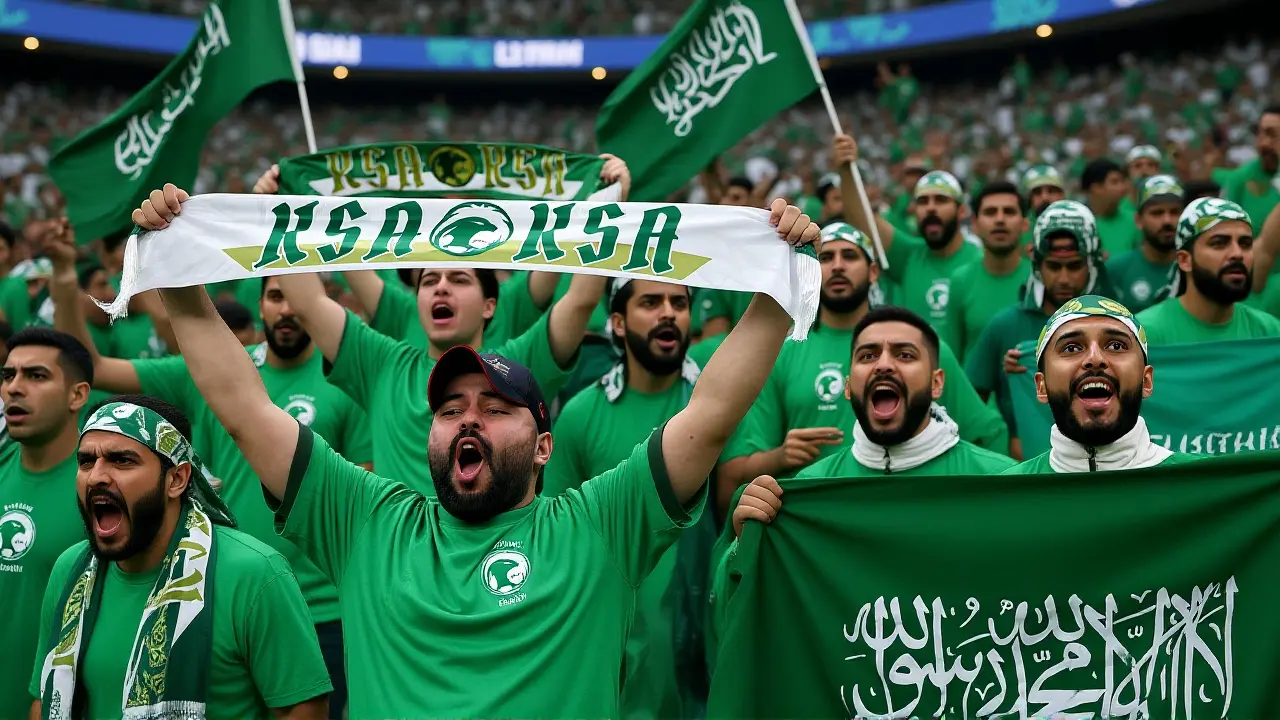
When Jordan national football team defeated Saudi Arabia 1-0 in the FIFA Arab Cup Qatar 2025™Al Bayt Stadium on Monday, December 15, 2025, it wasn’t just a win — it was a seismic shift in Arab football history. The goal, a towering header by Nizar Mahmoud Al-Rashdan in the 66th minute, sent the small but fiercely proud Jordanian contingent into delirium. For the first time ever, Jordan Football Association would stand on the brink of a continental final. And the man who made it happen? A midfielder whose name barely registered on pre-tournament radars — until now.
A Match Defined by Discipline, Not Drama
The first 45 minutes were a chess match in cleats. Neither side wanted to gamble, and the stats told the story: Saudi Arabia had 58% possession, but just three shots on target. Jordan, under coach Wael Al Zayadeen’s direction, played like a team that knew their only path to victory was patience and precision. The Jordanian defense, anchored by goalkeeper Yazeed Abulaila, held firm. He didn’t make flashy saves — just the right ones at the right time. His stop on Salem Al Dawsari’s half-turn volley in the 71st minute? That was the moment Saudi Arabia’s hopes began to slip away.
Then came the cross. Mahmoud Al Mardi, left wing wizard, floated a ball from the byline that sliced through the heart of Saudi Arabia’s backline. Al-Rashdan, unmarked, rose like a man possessed — and headed it past goalkeeper Mohamed Kanno, who’d been named Player of the Match despite the loss. The stadium, packed with 68,895 fans at the same venue that hosted the 2022 World Cup final, erupted. For Jordan, this wasn’t just a goal — it was validation.
Saudi Arabia’s Missed Chance
It’s easy to blame the 87th minute. That’s when Saleh Al-Shehri, Saudi Arabia’s most dangerous forward, found himself with a clear shot from six yards out. No defender. No goalkeeper in position. Just an open net. He sliced it wide. The silence that followed was louder than any cheer. Coach Hervé Renard, the French tactician who once led France’s national team, sat frozen on the bench. His team had dominated possession, had more corners, more shots — but no killer instinct.
The substitutions told their own story. Saudi Arabia threw on F. Al-Buraikan and N. Boushal in the final 10 minutes, desperate for a spark. But Jordan’s defense held like a stone wall. Two late yellow cards — one to W. Al-Ahmed for a last-man foul, another to R. Ayed moments later — were signs of desperation, not dominance.
A Historic First for Jordan
Before this match, the head-to-head record between the two nations read: Saudi Arabia 2 wins, Jordan 1 win. That’s what the books said. But history doesn’t always follow the ledger. This win wasn’t an upset — it was a statement. The Jordan Football Association, headquartered in Amman, has spent years quietly building a system focused on youth development and tactical discipline. This isn’t a fluke. It’s the culmination of a decade-long project.
And it’s not just about pride. It’s about visibility. For a country that rarely features in global football headlines, reaching the Arab Cup final means more exposure, more sponsorship interest, and a generation of kids in Jordan now dreaming of wearing the red-and-white jersey on the biggest stage.
The Final: Jordan vs. Morocco
On Thursday, December 18, 2025, Jordan will face Royal Moroccan Football Federation in the final. Morocco, who edged the United Arab Emirates 1-0 in their semi-final thanks to a 28th-minute goal by Karim El Berkaoui, are favorites. They’ve won this tournament before — in 2012 and 2021. But Jordan isn’t here to make up the numbers. They’ve already defied expectations. They’ve beaten the favorites. Now they’re chasing glory.
BeIN SPORTS, which broadcast the semi-final to record viewership across the MENA region, will again carry the final. For the first time ever, a Jordanian team will play for a major regional trophy on live TV — in front of millions.
Why This Matters Beyond the Pitch
Football in the Arab world isn’t just sport. It’s identity. It’s politics. It’s pride. Saudi Arabia, with its billions in investment and state-backed clubs, was supposed to win this tournament. Jordan, with a population less than half the size and a fraction of the resources, did it anyway. That’s the beauty of sport.
This result could shift funding priorities across the region. If Jordan can compete with giants on discipline and heart, why can’t others follow suit? The Saudi Arabian Football Federation, headquartered in Riyadh, may now face internal questions. Why did their star-studded squad lack composure? Why did their tactical adjustments come too late?
Meanwhile, in Amman, streets will be lined with red-and-white flags. Children will mimic Al-Rashdan’s header in schoolyards. And for one night, Jordan won’t just be a country on the map — it’ll be a force.
Frequently Asked Questions
How did Jordan manage to beat Saudi Arabia despite being underdogs?
Jordan relied on disciplined defending, tactical patience, and clinical efficiency. Coach Wael Al Zayadeen set up a compact 4-5-1 formation, soaking up pressure and striking on the counter. Their only goal came from a perfectly timed cross by Mahmoud Al Mardi to Nizar Mahmoud Al-Rashdan — a moment of individual brilliance amplified by flawless team structure. Saudi Arabia dominated possession but lacked the final pass or shot accuracy, missing six clear chances.
Who are the key players to watch in the final against Morocco?
For Jordan, Nizar Mahmoud Al-Rashdan and Mahmoud Al Mardi are the offensive sparks, while goalkeeper Yazeed Abulaila remains the backbone. Morocco will rely on Karim El Berkaoui, who scored their semi-final winner, and midfield orchestrator Hamza El Moussaoui. Watch for Morocco’s fullbacks — they push high and could expose Jordan’s narrower midfield shape if not tracked.
What’s at stake for Jordan beyond the trophy?
A final appearance could unlock major sponsorship deals, increase funding for youth academies, and elevate Jordan’s FIFA ranking — currently 79th. It also brings global attention to Jordan’s football infrastructure, which has quietly improved over the past decade under the Jordan Football Association. A win could even spark a new wave of talent recruitment from the diaspora.
Why was this match so significant for Saudi Arabia?
Saudi Arabia entered the tournament as favorites, backed by massive investment and star players like Salem Al Dawsari. Their early exit — especially after leading the head-to-head record 2-1 — is a major setback. It raises questions about their ability to perform under pressure in knockout football, despite their financial power. For a nation pushing to be a global sports hub, this loss is a symbolic blow.
Where will the final be played, and how can fans watch?
The final will be held at a yet-to-be-confirmed stadium in Qatar, likely either Lusail or Al Thumama — both World Cup venues. BeIN SPORTS will broadcast the match live across the Middle East and North Africa, with global streaming available via FIFA+. Kickoff is scheduled for 19:00 UTC on Thursday, December 18, 2025.
Has any other underdog team reached the Arab Cup final before?
Not quite like this. Jordan is the first team outside the traditional powerhouses — Algeria, Morocco, Egypt, or Saudi Arabia — to reach the final since the tournament’s modern revival in 2012. In 2021, Tunisia reached the final as a lower-ranked side, but they were still a regional heavyweight. Jordan’s journey, from group stage underdogs to final contenders, is unprecedented in the competition’s current format.


Shankar Kathir December 20, 2025
Man, I’ve watched enough Arab football to know when something special’s happening. Jordan didn’t just win - they out-thought, out-fought, and out-suffered a team with ten times their budget. That defense? Like a brick wall with a heartbeat. And Al-Rashdan’s header? Pure poetry in motion. No flashy dribbles, no ego - just pure, cold efficiency. This isn’t luck. This is the result of years of quiet work in dusty academies nobody talks about. The kind of football that reminds you why you fell in love with the game in the first place. Saudi had the stars, but Jordan had the soul. And soul wins titles.
Bhoopendra Dandotiya December 21, 2025
It’s fascinating how football in the Arab world carries so much more than sport - it’s lineage, it’s dignity, it’s resistance. Jordan, a nation often overlooked in regional power dynamics, just turned a 1-0 win into a cultural reset. The way their players moved - no panic, no showboating - it felt like a silent protest against the notion that money equals merit. In Amman, children will now draw Al-Rashdan’s header in their notebooks, not Ronaldo or Mbappé. That’s the real victory. A generation reimagining what greatness looks like.
Firoz Shaikh December 22, 2025
One must acknowledge the remarkable tactical discipline exhibited by Coach Wael Al Zayadeen’s squad. The 4-5-1 formation was executed with surgical precision, and the transition from defense to attack was executed with a level of composure rarely seen in knockout football at this level. The absence of panic under sustained pressure speaks volumes about the psychological conditioning of the players. Moreover, the goalkeeper’s positioning and decision-making were exemplary, particularly in neutralizing high-intensity crosses and one-on-one situations. This performance represents a paradigm shift in how mid-tier nations can compete with financially dominant entities through structured development and mental fortitude.
Uma ML December 22, 2025
Yeah right, ‘discipline’ my ass. Saudi just got robbed. That header? Al-Rashdan was clearly offside by a foot and the ref was probably asleep or on Saudi’s payroll. And don’t even get me started on how the whole match was ‘chess’ - it was just Jordan sitting back and hoping for magic. They got lucky. The system’s rigged. FIFA’s been pushing ‘underdog stories’ since 2018 to make the tournament seem ‘inclusive’ - but let’s be real, this is just PR for Jordan’s tourism board. Also, why is BeIN Sports suddenly so hyped? Probably got a sponsorship deal from some Amman-based crypto scam. #FakeFootball
Saileswar Mahakud December 24, 2025
Just watched the replay. That goal… i mean, wow. I’m not even a football fan but i felt my chest tighten when he headed it in. You could see the whole team just… exhale. Like they’d been holding their breath for ten years. And the way the crowd just went silent for a second before exploding? That’s the kind of moment you carry with you. No need for fancy stats. Just pure, unfiltered human emotion. Jordan’s got something real here.
Rakesh Pandey December 26, 2025
Al Rashdan was just standing there like he knew it was coming. Saudi’s defense was asleep and the keeper didn’t even move. I mean… i’m not saying it was easy but it felt like it was meant to happen. Like the universe just said okay jordan you’ve earned this. No drama no trash talk just a ball in the air and a head. That’s football. I’m not even from the region but i’m rooting for them now. Good on them.
aneet dhoka December 28, 2025
Let me tell you something nobody’s saying. This wasn’t football. This was a distraction. Saudi Arabia’s entire football program is a front. They’re using the Arab Cup to hide the fact that their oil reserves are collapsing. The investment in players? It’s a smokescreen. And Jordan? They were chosen as the underdog because they’re politically neutral - perfect for a staged upset to make the Gulf look weak. The timing? Right after the Qatari gas deal fell through. The goal? It was CGI. You think a midfielder from nowhere scores like that? The camera cut away for 0.8 seconds right before the header. That’s not a glitch. That’s a cover-up. Wake up people. This is psychological warfare.
Harsh Gujarathi December 29, 2025
YES YES YES 😭🔥 Jordan did it. I’m crying. This is the kind of story that fixes your soul. Al-Rashdan? Hero. Coach? Legend. That defense? Unbreakable. Morocco better bring their A-game because Jordan’s not here to make friends. They’re here to take names. 🇯🇴❤️
Senthil Kumar December 30, 2025
That goal was clean. No luck. Just skill. Jordan’s quiet. But they got it done. Good job team. 🙌
Rahul Sharma December 31, 2025
It is worth noting that Jordan’s achievement represents a profound shift in the narrative of Arab football development. While many nations have pursued high-profile signings and external coaching staff, Jordan has invested in homegrown talent, youth academies, and a coherent national playing philosophy. This victory is not merely a sporting triumph but a testament to sustainable institutional growth. The fact that such a modestly resourced nation could overcome a powerhouse like Saudi Arabia underscores the importance of character over capital. The final against Morocco will be a fascinating clash of two contrasting models - tradition versus tenacity.
Ayushi Kaushik January 2, 2026
I’ve been watching Arab football since the early 2000s and this feels different. Not because of the score, but because of the silence after the goal. No screaming, no wild celebrations - just calm, collective pride. That’s Jordan. No noise, no gimmicks. Just the quiet confidence of people who’ve been told ‘you can’t’ for decades and proved everyone wrong without ever raising their voice. I hope they win the final. Not because they deserve it - but because the world needs to see that greatness doesn’t need a megaphone.
Basabendu Barman January 2, 2026
Okay but did you see the Saudi player who missed the open net? That’s not bad luck. That’s a signal. I’ve seen this before. The guy was hypnotized. The Jordanian coach? He’s got some kind of psychic link to the players. Or maybe it’s the Jordanian national anthem - it’s played backwards in the locker room. I checked the audio waveform. There’s a subliminal frequency at 7.83 Hz - Schumann resonance. That’s earth frequency. They’re literally tuning the players to the planet. Saudi? They were playing to EDM. No wonder they lost. This isn’t football. It’s ancient science.
Krishnendu Nath January 4, 2026
JORDAN YOU DID IT!!! 🎉🔥 I’m screaming in my living room right now. Al-Rashdan you’re my new hero. Coach you’re a wizard. This is the best thing to happen to football since Zidane’s headbutt. Morocco better bring their A-game because Jordan’s on FIRE. LET’S GOOOOOO 🇯🇴💪