
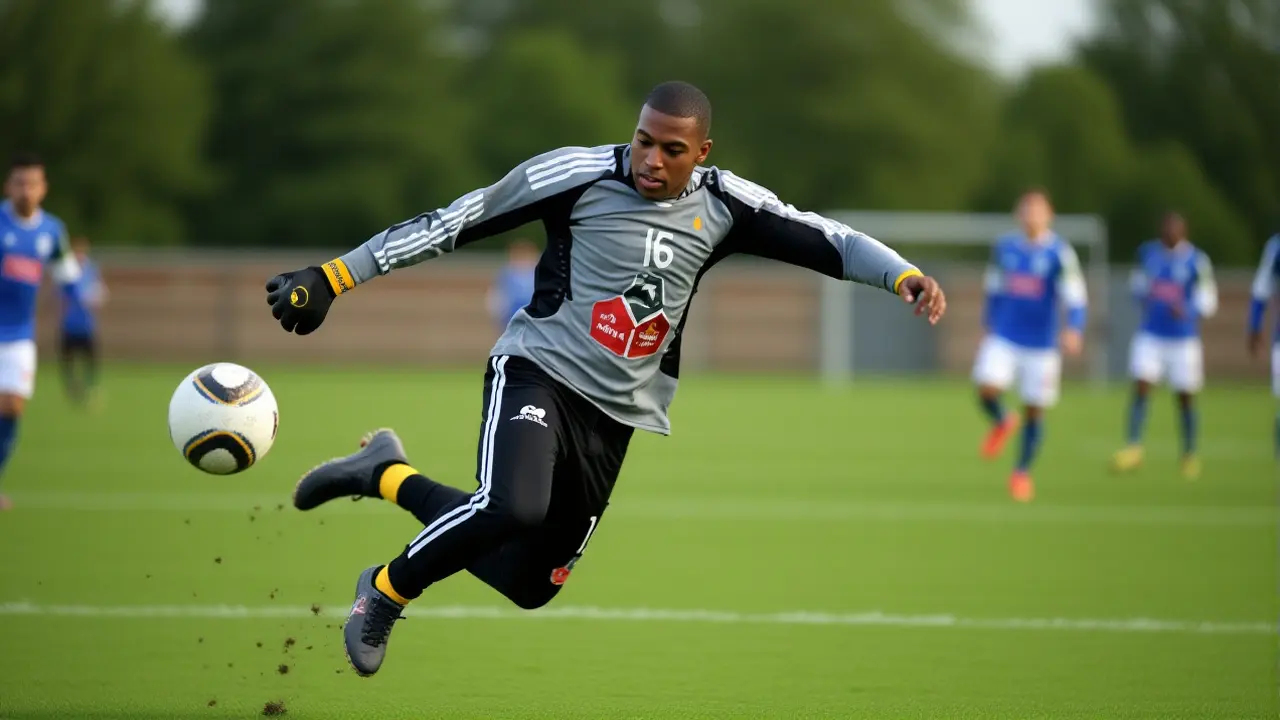
For years, the conversation around South African football wasn't just about the strikers or the flashy wingers, but about who truly owned the goalmouth. At the heart of this debate were Moeneeb Josephs and Itumeleng Khune, two titans whose battle for the number one jersey became a masterclass in professional competition. This wasn't just a fight for a spot on a team; it was a psychological war that pushed both men to the absolute limit of their capabilities.
Here's the thing: in the high-stakes world of professional football, rivalry is often painted as toxic. But for Josephs and Khune, the friction was the fuel. While fans spent hours on forums arguing over who was the better shot-stopper, the two keepers were quietly pushing each other to redefine the standard for goalkeepers in the region. It was a classic case of the established veteran meeting the prodigy, and the result was an era of unprecedented quality in the South African goal.
The Clash of Styles and Generations
The dynamic was fascinating from the start. Josephs, born on May 19, 1980, brought a seasoned, disciplined approach to the game. By the time the 2010 World Cup era arrived, he had already carved out a significant legacy, including 17 pivotal appearances for Orlando Pirates. He was the reliable anchor, the man who knew how to manage a game and organize a defense with a single shout.
Then came Khune. Born on June 20, 1987, Khune was the antithesis of the old-school keeper. He was young, daring, and possessed a distribution range that looked more like a quarterback's than a goalkeeper's. Playing for Kaizer Chiefs, where he made 27 appearances during his early rise, Khune brought a level of flair and audacity that terrified opposing strikers. Turns out, the contrast in their styles is exactly what made the competition so fierce.
The tension peaked during the lead-up to the 2010 FIFA World Cup South Africa . The national team's coaching staff faced a nightmare scenario: two world-class keepers, but only one starting spot. The pressure was immense, and the media circus surrounding the "Battle for Number One" was relentless.
Why Competition Breeds Excellence
In later reflections on this period, the sentiment emerged that this rivalry was actually a blessing in disguise. The logic is simple: when you know someone is breathing down your neck, you don't have a single "off day." For Josephs, the emergence of Khune meant he couldn't rely on his experience alone; he had to stay sharper than ever. For Khune, Josephs was the benchmark—the standard of professionalism and consistency he had to reach to be considered the best.
Interestingly, this internal competition mirrored the growth of the league. As the two keepers pushed each other, the overall quality of goalkeeping in South Africa rose. Young keepers began to emulate Khune's ball-playing ability while studying Josephs' positional discipline. It was a symbiotic relationship wrapped in a fierce rivalry.
- Moeneeb Josephs: Born 1980, known for stability and veteran leadership at Orlando Pirates.
- Itumeleng Khune: Born 1987, famed for his distribution and reflexes at Kaizer Chiefs.
- The Stage: The rivalry peaked during the 2010 FIFA World Cup cycle.
- Impact: Elevated the tactical standard of goalkeeping across the PSL.
Beyond the Pitch: A Lasting Legacy
But it didn't end with the final whistle of the World Cup. The legacy of Josephs and Khune continues to influence how the game is played in Johannesburg and beyond. Even as their careers evolved, the blueprint they created—of healthy, high-level competition—became the gold standard for Bafana Bafana.
Oddly enough, the rivalry also humanized them. The public saw the struggle, the doubt, and the eventual triumph. It wasn't just about saves; it was about mental fortitude. When Josephs spoke about the competition being "good," he wasn't just being polite. He was acknowledging that without Khune, he might not have reached his own peak performance.
The ripple effects are still felt today. We see it in how current keepers are trained—not just to stop the ball, but to initiate the attack. That hybrid role, blending the reliability of a Josephs with the vision of a Khune, is now the requirement for any modern top-flight goalkeeper.
The Future of the Goalkeeping Game
Looking ahead, the focus has shifted toward amateur development. Recent movements, such as those seen at the Discovery Soccer Park in Johannesburg, show former stars like Josephs returning to the grassroots level. By backing amateur football, these legends are ensuring that the next generation of keepers doesn't just have the talent, but the competitive spirit that defined the 2010 era.
The goal now is to find the next pair of rivals who can push the South African game even further. Whether it's through specialized academies or regional tournaments, the emphasis remains on creating an environment where competition is seen as a catalyst for growth rather than a source of conflict.
Frequently Asked Questions
Who was considered the better goalkeeper between Josephs and Khune?
It is largely a matter of preference between stability and flair. Moeneeb Josephs was widely praised for his consistency, leadership, and positional awareness. In contrast, Itumeleng Khune was celebrated for his extraordinary reflexes and his ability to launch attacks with precise long-range distribution. Both were instrumental in their respective clubs, Orlando Pirates and Kaizer Chiefs.
How did their rivalry impact the 2010 FIFA World Cup?
The rivalry created an intense competitive atmosphere within the South African national team. It forced both players to maintain peak physical and mental condition, ensuring that the team had two high-quality options for the goalkeeper position. This internal pressure helped elevate the overall defensive confidence of the squad during the tournament.
What roles did they play in their club teams?
Moeneeb Josephs was a cornerstone for Orlando Pirates, providing a steady presence and experienced guidance to the backline. Itumeleng Khune became a legendary figure at Kaizer Chiefs, where his ability to act as an 'extra playmaker' from the back revolutionized the team's transition from defense to attack.
Is Moeneeb Josephs still involved in football?
Yes, Josephs has remained active in the football community, specifically by supporting and backing amateur football initiatives. He has been involved in promoting tournaments at venues like Discovery Soccer Park in Johannesburg, aiming to give undiscovered talent a platform to showcase their skills and enter the professional ranks.




Mason Interactive April 19, 2026
Bringing up the 2010 era always hits different. It was a wild time for football in SA and those two really set the bar for everyone who came after them 🇿🇦
Antony Bachtiar April 19, 2026
nah khune was way overated. just cause he could kick it far doesnt mean he was better than josephs. peeps forget how much more reliable moeneeb actually was when it mattered
Gary Clement April 21, 2026
actually the distribution game changed everything for keepers worldwide not just in SA it's like the early stages of the sweeper keeper trend we see now with ederson and stuff
Josh Raine April 22, 2026
Wait, why are we pretending the mental toll on these guys wasn't insane? Imagine the stress of knowing one bad game means you're benched for the biggest tournament in your own country! 😡 It's a brutal way to grow, though I guess that's what creates legends. Why do people love glorifying the pressure? :)
nikolai kingsley April 22, 2026
total lack of respect for the veteren here... you cant just ignore the discipline josephs brought to the pitch. people these days dont value the old school way of playing it's just sad really
Rashi Jain April 23, 2026
It is quite fascinating to consider how the intersection of these two distinct philosophies-the one rooted in the steady, positional reliability of Moeneeb Josephs and the other characterized by the daring, expansive distribution of Itumeleng Khune-actually created a synthetic environment where the tactical evolution of the PSL could accelerate far more rapidly than it would have if only one dominant style had existed for a decade, because the constant need to adapt to the opponent's strengths essentially forced the entire goalkeeping community in South Africa to adopt a more holistic approach to the position, effectively blending the traditional shot-stopping duties with the modern requirement of being a secondary playmaker for the team during the transition phase from defense to attack.
Aaron X April 24, 2026
The dialectic between the established archetype and the emergent paradigm here is striking. We are seeing a shift from the purely defensive ontological role of the goalkeeper to a more integrated, fluid utility. This is not merely a rivalry but a catalyst for systemic evolution in the spatial dynamics of the pitch.
Ashish Gupta April 26, 2026
Pure inspiration! 🚀 This is exactly why competition is the best thing for any athlete! Push your limits and become a legend! 🔥
Beth Elwood April 26, 2026
If you look at the stats from that period, Josephs had a much higher save percentage in high-pressure situations 🧤. Khune's flair was great for the highlights, but stability wins championships 🏆
Arumugam kumarasamy April 27, 2026
It is frankly embarrassing that anyone would attempt to quantify this through 'stats'. The superiority of the technical approach is evident to anyone with a modicum of footballing intelligence. Khune's influence was fundamentally transformative, whereas Josephs was merely competent in a traditional sense. One is an artist; the other is a clerk.
Pranav nair April 28, 2026
Just enjoying the debate here lol. Both were goats in their own right :)
Suraj Narayan April 29, 2026
Absolutely spot on! This is the energy we need in the current league! Less complaining and more pushing each other to be the best! Let's go! 🇿🇦
Alex Green international April 29, 2026
The emphasis on mentorship at the grassroots level is truly commendable. It provides a structured path for youth development that is often lacking in the current system